
The term "healthy diet" seems like a closed book to most people. Many find it difficult to maintain a balanced diet due to lack of time, an abundance of food, or unplanned eating habits. This quickly raises questions such as: What can you eat? How is a healthy diet characterised? What does a healthy diet really look like? What does it actually do for me?
To answer these questions, we offer you a small insight into the topic of healthy eating!
It is hardly possible to define a healthy and balanced diet universally, as every body is different. This means that every person needs their own dietary form or different nutrients. The motto here is: Listen to your own body!
In general, your own well-being and your requirements for a healthy diet are paramount. These can vary based on your body characteristics such as age, weight, and gender, or based on your individual taste. However, it can generally be said that all the important nutrients the body needs should be covered. In addition, sufficient calorie intake is important to stay strong and get the metabolism going.
It is of great importance that you prepare and consume as unprocessed and fresh foods as possible. This means no artificial additives or preservatives but rather keeping the foods in their natural form as much as possible. Because during the processing, many important nutrients such as vitamins, minerals, fiber, and antioxidants are lost.
Moreover, processed foods take the work away from digestion due to their previously artificially high processing. This in turn means that you need more calories to feel full, and the feeling of fullness usually doesn't last long. Another negative aspect is the often unexpectedly high amounts of processed sugar and salt.
But the top rule for a long-term healthy diet is: Restrictions in a healthy measure! If there are too many prohibitions and you don't plan for occasional exceptions, it is often difficult to maintain a healthy diet in the long run. The chance of having a binge-eating attack is increased and turns your diet upside down uncontrollably.
It is undisputed that a healthy diet is a fundamental pillar for general well-being and vitality. The benefits of a healthy diet are as varied as they are significant — as they go far beyond merely counting calories or avoiding fat.
You will notice that by eating a healthy diet and consuming the right nutrients, you can enhance your fitness and well-being. You get through the day fitter, and your athletic performance changes as well.
Another side effect is that your awareness of your own body can change and strengthen. By consciously adjusting your diet, you automatically engage more with your own body and what you consume.
Deficiencies in your body can be reduced through a healthy lifestyle. You will notice that optimal nutrient supply has a positive effect on your body. For example, vitamin B12 is not produced by our own body. This means we rely on eating foods that contain B12. Otherwise, our metabolism, blood, and nerves could suffer from deficiencies. The vitamin is mainly found in animal products like meat, fish, eggs, and dairy products. As a vegan and thus plant-based alternative, fermented foods like kimchi or sauerkraut, algae products, soy products, and legumes are suitable. However, they contain significantly less vitamin B12 compared to animal products.
Another important advantage is the topic of health prevention. A healthy diet can avert many well-known common diseases. These include diseases like obesity, diabetes, high blood pressure, and cardiovascular diseases. A one-sided and unhealthy diet or a long-term excessive energy intake can cause overweight and inflammation in the body. This can cause the organism to become unbalanced and promote diseases. Basically, a wide range of healthy foods is recommended to cover nutrients and avoid inflammation through poor nutrition. A healthy mix of antioxidants, fiber, proteins, omega-3 fatty acids, vitamins, and minerals is quite important.
For all eternal diet fighters, there is good news: By making a long-term change to your diet without complete renunciation, your pounds will automatically drop. It takes longer than with a diet, but it counteracts the dreaded yo-yo effect, as it is a long-lasting solution.

While the content and definition of a healthy diet can vary from person to person, the food pyramid offers you a basis as a foundation for a balanced diet. It shows all the building blocks that are part of a healthy diet and creates room for your personal individuality.
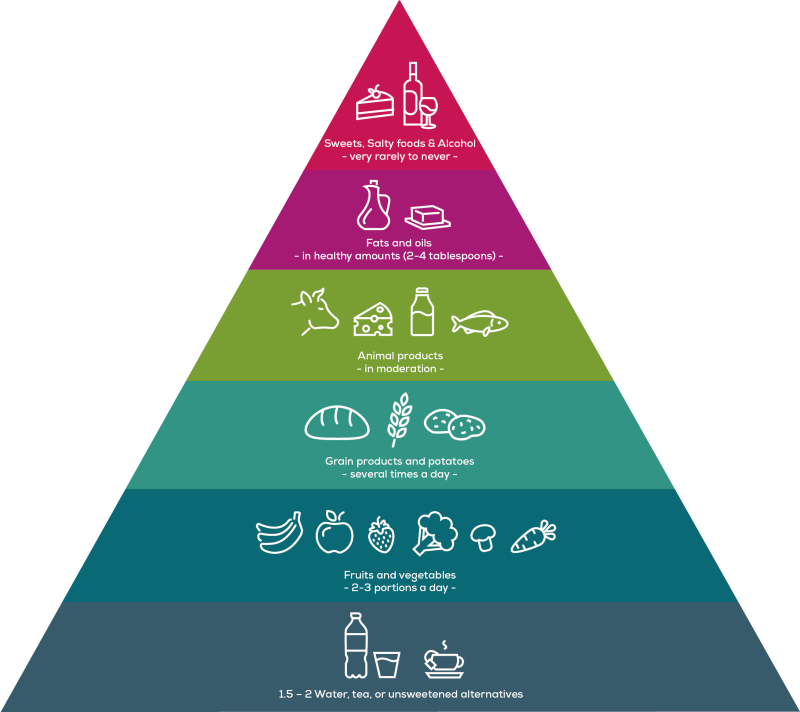
The foundation for a wholesome and healthy diet offers you a wide range of healthy foods that you can consume without worries. But first, the focus is not on the food itself, but on drinking. 1.5 – 2 liters of water a day are considered a solid foundation. It matters what you drink: Preferably, you should drink water, herbal tea, or other unsweetened alternatives.
Besides drinking, you should eat enough fruits and vegetables every day. They provide you with many healthy vitamins and nutrients. The health-promoting properties, such as vitamin C, phytochemicals, and fiber, promote your digestion and reduce fat metabolism disorders. Moreover, most fruits and vegetables are low in calories but rich in potassium and magnesium. Still, be careful to eat fruit in healthy amounts. Especially fruits like bananas and grapes have a high fructose content.
Rice, potatoes, pasta, whole grain bread, oats, and other cereal flakes form the basis for a balanced diet alongside fruits and vegetables and make you feel full. These fiber-rich foods are high in carbohydrates and provide your body with energy. It is especially recommended to opt for whole grain in these products. Whole grains keep you full longer than wheat products and reduce the risk of diseases such as type 2 diabetes.
These foods should complement your base of vegetables, fruits, and cereal products, as well as potatoes. This means that these products should be consumed in moderation. This group of protein-rich foods includes dairy products, eggs, meat, and fish. They mainly provide your body with proteins and iodine. Especially dairy products contain a lot of protein, vitamin B2 and B12, and calcium. You find iodine and omega-3 fatty acids in fish. Meat, in turn, provides you with vitamin B12, iron, selenium, and zinc. However, too much meat, especially sausage or red meat, poses health risks.
First, you should be aware: Fat is not just fat. Many people want to avoid fats and oils because they are generally considered negative. However, this is not entirely true. Fats and oils are just as important dietary building blocks for humans as other building blocks of our diet. A distinction is made between saturated and unsaturated fatty acids.
Saturated fatty acids should be enjoyed in moderation, as they are considered "unhealthy." Unsaturated fatty acids represent the "healthy fats" and are mainly found in nuts, avocados, and vegetable oils such as olive oil. They are important for vitamin absorption in the body.
All in all, you should consume fats and oils in healthy amounts (2-4 tablespoons).
Finally, the sweet and salty sins of the diet! Chips, cakes, sweets & co. - these should be mostly avoided. They contain hardly any necessary nutrients for the body and instead many bad calories. In addition to snacks, alcoholic beverages and sugary soft drinks are also among the extras that the body does not need.
Exercise may not be attributed as a classic building block of a healthy diet, but it is just as important for a health-conscious lifestyle.
Through exercise and sports, you keep your body young and fit, can maintain your weight more easily, and enhance your well-being for your own body. In addition to sports, everyday activities such as walking or cycling play an important role. According to the World Health Organization (WHO), it is recommended that adults engage in moderate physical activity for 21 minutes a day. Furthermore, small measures can help you become fitter in everyday life. These include examples such as taking the stairs instead of the elevator or leaving the car behind more often and walking or cycling instead. Your body will definitely thank you.
Tip: If you want to lose weight, it is best achieved when you find a healthy balance between the right diet and sufficient exercise. It is important that calorie intake should be lower than daily calorie consumption.
Developing a new habit is not easy at first, especially when it comes to nutrition. Here you will find 4 tips & tricks to help you adopt the new habit more easily.
When adopting a balanced diet, make sure it is varied! A colorful plate is much more appealing when eating, and variety prevents boredom with meals. A healthy diet does not mean having to eat salad every day. Enjoy the diversity of foods and ideally create a meal plan for each week.
Mindful eating means taking enough time while eating. This includes chewing sufficiently and occasionally taking breaks during meals. This promotes both the enjoyment factor and the feeling of fullness. Eating more slowly gives you a better sense of when you are truly full.
Present your food nicely when cooking. An appealing plate makes the prepared meal more tempting. Take your time and let your creativity run free. Additionally, arranging your food enhances your awareness of good eating.
Cook and bake your own dishes instead of opting for ready-made products. Many ready-made products contain ingredients and additives that the body does not need and are also unhealthy. When you cook yourself, you know what you are eating and what is really in it. Additionally, you can better determine the freshness of your ingredients and adjust recipes if needed to make your dishes healthier. For example, when baking, you can switch from regular wheat flour to spelt or wholemeal flour.
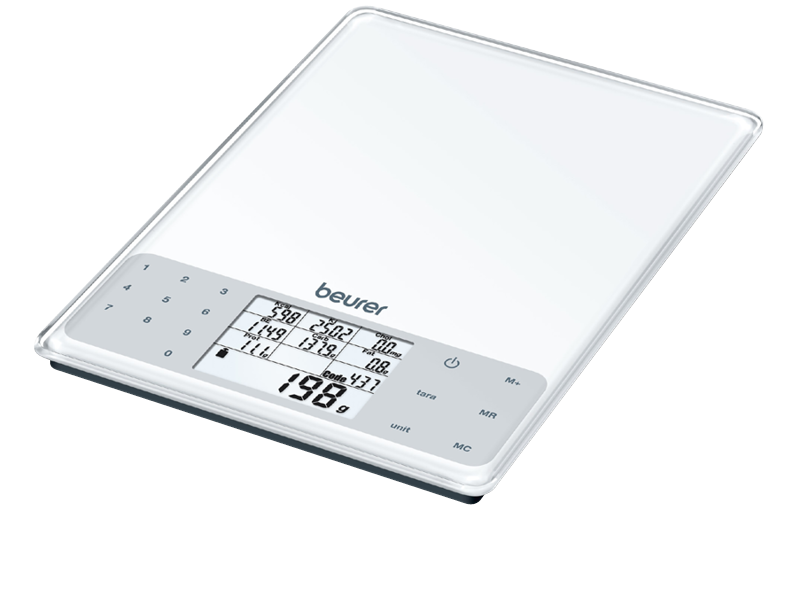
In healthy eating, it is particularly important to always keep an overview. With the Nutritional analysis scale DS 61, you have the nutritional and energy values of 950 stored foods, have 50 individually assignable storage spaces, and can measure food to the gram. This makes cooking and baking at home a breeze!
1 WHO, Physical activity recommendations, https://www.who.int/europe/news-room/fact-sheets/item/physical-activity
Beurer Healthguide
This advice page was made by Beurer GmbH and is intended to help you feel healthy and happy all round.
The content of the Healthguide is intended to provide assistance and information and can in no way replace the advice of a doctor.
Questions
If you have any questions or suggestions about our advice page, you can contact us at any time.