
Everyone knows it, no one likes it - on average, most of us have a cold 2 to 4 times a year. Toddlers even more often. With our tips, you can strengthen your immune system and effectively alleviate annoying cold symptoms.
Adequate fluid intake is essential to keep the body well hydrated. Water and unsweetened tea are particularly recommended. They not only help to keep the mucous membranes moist, but also support the removal of pathogens. It should be 2 to 2.5 litres per day. Our tip for the cold season: ginger tea with honey, lemon and a pinch of cayenne pepper - this not only warms from the inside, but also has an anti-inflammatory effect.
Give your body enough time to regenerate by getting enough sleep and giving it rest. Sleep is not only important to stay fit and focused, but also to strengthen the immune system. During sleep, our immune system is running at full speed. Various scientific studies prove the positive effect of a restful night's sleep on our immune defence.
A medical study showed that the immune function of the body's own T cells is restricted by sleep deprivation.*1 T cells play an important role in our immune system, as they kill pathogens and at the same time regulate the immune defence. After just 3 hours of sleep deprivation, the study showed the adhesion of the T cells (i.e. the ability to latch on to diseased cells and kill them) was notably reduced.
In another clinical study*2, 164 subjects were given cold viruses by nasal spray. The results of this study also confirm that a shorter sleep duration is associated with an increased likelihood of developing a cold. Particularly in people who slept less than 5h per night, the risk increased. Almost half of the short sleepers became ill. Those who had slept more than 7 hours remained healthy with a probability of more than 80%.
The well-known "sleep yourself healthy" is therefore much more than a well-meant phrase. Those who sleep too little weaken their defences, increasing the risk of infections, inflammations and chronic diseases. Our body often signals to us on its own when our immune system needs an extra dose of sleep and rest. As soon as we feel an infection, we feel more tired than usual and have an increased need for sleep.

Inhalation is a natural and proven method to alleviate respiratory complaints such as colds, bronchitis or asthma. By inhaling fine steam particles, the active ingredients reach the affected areas in the respiratory tract directly. This can help to loosen mucus, reduce inflammations and clear the airways. You can start inhaling as soon as a cold starts or as a preventive measure. Two methods are distinguished in inhalation: steam inhalation or steam nebulisation and inhalation with nebulisers.
The general difference between the two technologies lies in the accessibility of the smallest lung-friendly active ingredient particles that are generated during use.
The classic variant is steam inhalation over a bowl of hot water. Here, essential oils such as eucalyptus or chamomile can be used to enhance the soothing effect. The rising steam is inhaled through the mouth and nose and thus acts in the upper respiratory tract. Modern steam nebulisers ensure a particularly effective application thanks to their constant temperature setting.
The SI 40 steam nebuliser from Beurer is suitable for the whole family thanks to its flexible universal mask and is a real must-have for every home.
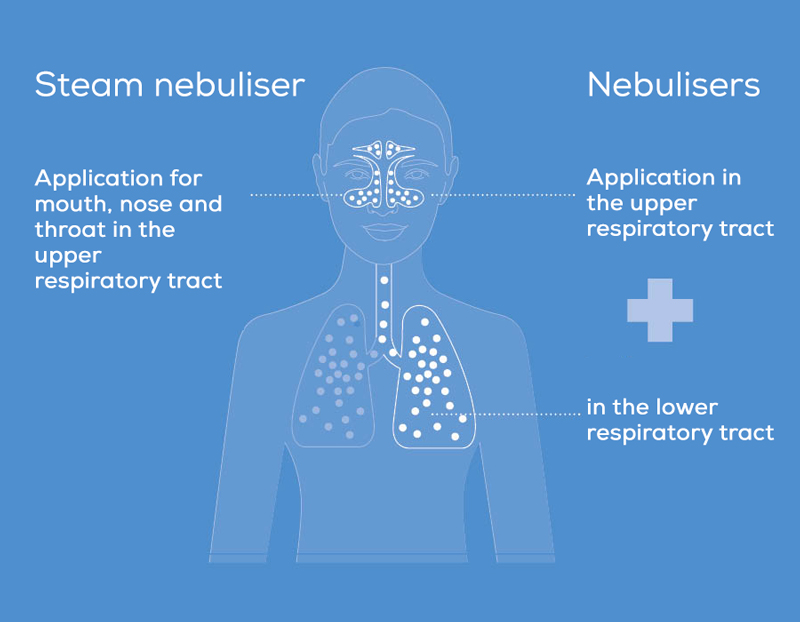
In contrast to steam nebulisation, modern nebulisers produce a constantly high number of smallest particles during operation, which penetrate particularly deep into the respiratory tract. They reach both the upper and lower respiratory tract. Beurer offers you a comprehensive range of modern nebulisers. The choice of the right nebuliser for you depends on your needs. However, the use of nebulisers should always be in consultation with your doctor. He will advise you on the selection, dosage and application of the inhalation therapy suitable for you.
These are the advantages of inhalation with a nebuliser:
Exercise is not only good for your body, but also for your immune system. Even if it's cold and uncomfortable outside, you shouldn't miss out on outdoor exercise. Choose light activities like a leisurely walk or gentle jogging. The combination of exercise and fresh air is an unbeatable weapon against colds. A walk in the fresh air promotes blood circulation, supplies the body with oxygen and strengthens the immune system. You can also soak up daylight and thus prevent symptoms of light deficiency such as concentration disorders and depressive moods.
>> More about the importance of daylight for our body can be found in this article
A balanced diet is of great importance, especially in the cold season. Vitamins and minerals support your immune system and help to ward off pathogens.
Vitamin C is probably the best-known vitamin when it comes to strengthening the immune system. It not only contributes to the formation of collagen, which is important for skin health, but also has antioxidant properties. These help the immune system to neutralise free radicals and strengthen the defences. Good sources of vitamin C are citrus fruits, peppers, black currants and broccoli.
About 70% of our immune system is located in our gut. The gut is not an isolated unit, but a living ecosystem of trillions of microorganisms, the gut microbiome. This multitude of bacteria and other microorganisms not only influences digestion, but also plays a crucial role in warding off pathogens.
A healthy gut microbiome helps to keep harmful pathogens in check and promotes the formation of immune cells that protect us from infections. With a balanced, fibre-rich diet, you optimally support your gut in its work.
The group of B vitamins, especially B6, B9 (folic acid) and B12, play an important role in supporting the immune system. These vitamins are essential for the formation of new cells, including immune cells. They are also involved in the production of DNA, which is of great importance for cell division and repair. Foods such as whole grains, legumes, nuts and green leafy vegetables are rich in B vitamins and should therefore regularly be on your menu.
The vitamin D from the sun is also crucial for our immune system. It activates the defence cells and regulates the immune system. With the help of UV radiation, our body can produce the vitamin itself. If sun exposure is not sufficient, vitamin D can also be taken in through foods such as fish, eggs and fortified foods.
Stress not only weakens the psyche, but also demonstrably weakens your immune system and makes you more susceptible to diseases. Consciously take time for relaxation and recovery. Whether it's a good book, a hot bath or just a cosy evening with friends - find out what's good for you and reduces stress. A balanced mind supports your body in becoming and staying healthy.

*1 https://www.ncbi.nlm.nih.gov/pmc/articles/PMC3256323/
*2 https://academic.oup.com/sleep/article/38/9/1353/2417971?login=false
Beurer Healthguide
This advice page was made by Beurer GmbH and is intended to help you feel healthy and happy all round.
The content of the Healthguide is intended to provide assistance and information and can in no way replace the advice of a doctor.
Questions
If you have any questions or suggestions about our advice page, you can contact us at any time.